Power & Charging
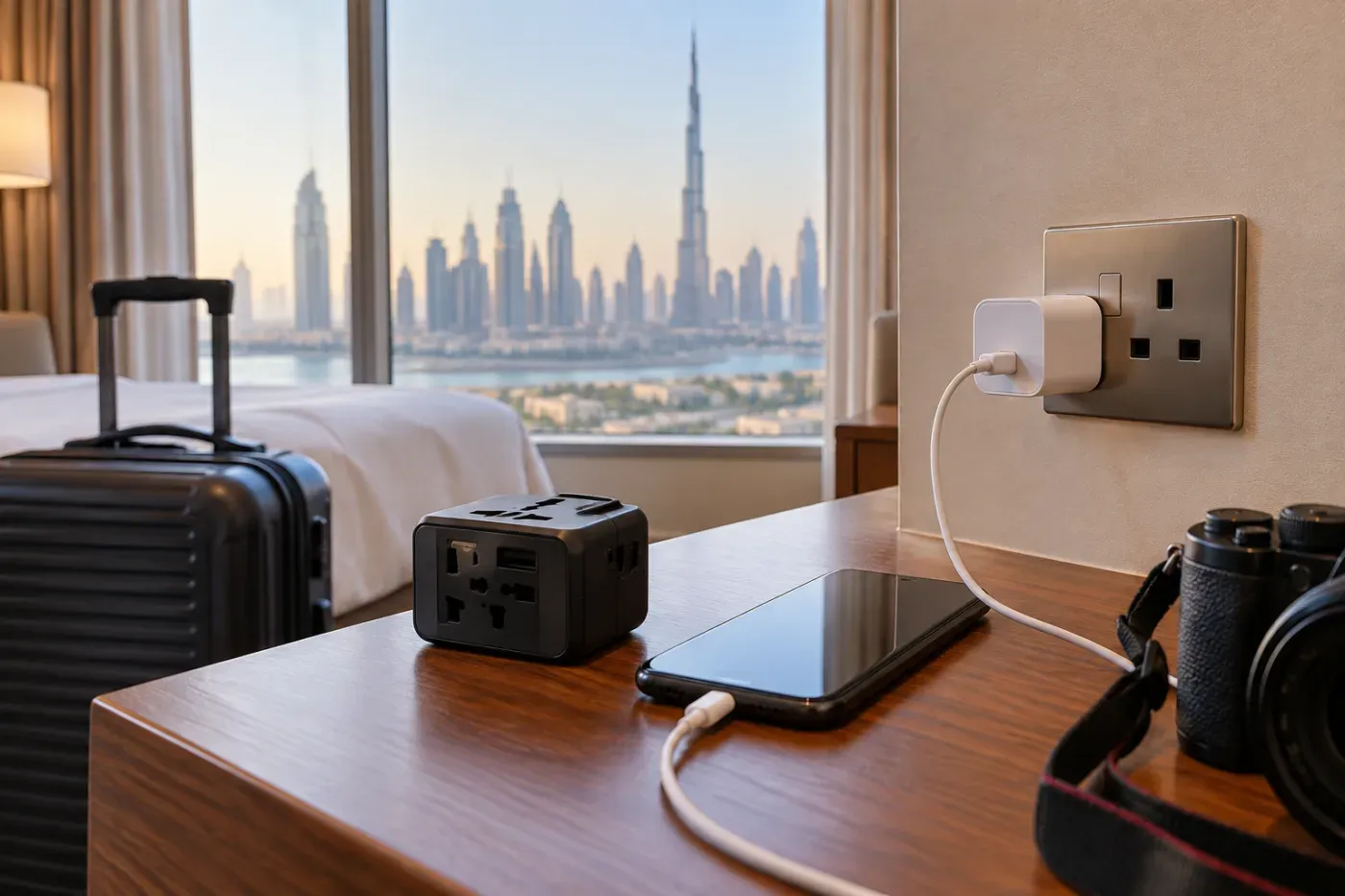
UK type G plug (3-pin), 220V. Bring a universal adapter and a power bank for desert trips.
Plugs, voltage and adapters
The UAE runs British-style type G three-pin sockets at 220–240V — identical to the UK system. British visitors plug straight in; everyone else needs an adapter, and the universal all-in-one type (covering 150+ countries with USB ports built in) is the single best travel-tech purchase for Gulf trips. Buy it at home: airport and mall prices run double for the same hardware.
Hotels increasingly add USB-A and USB-C charging ports bedside, but never rely on them exclusively — carry the wall adapter regardless. Voltage matches European standards, so EU appliances need only a plug-shape adapter, while 110V-only American devices (older hair tools, some kitchen gadgets) need a proper voltage converter or will fry.
Power banks and desert power
A high-capacity power bank (10,000–20,000 mAh) is mandatory kit, not optional: GPS navigation, 5G cameras, ride-hailing and ticket QR codes drain phones fast, and desert days, theme parks and old-town walks offer zero charging. Charge the bank overnight like brushing teeth — a dead bank weighs the same as a live one and helps nobody. Cable redundancy matters equally: one USB-C, one Lightning if your household is mixed, plus a short cable for power-bank-in-pocket top-ups on the move.
Desert camps and overnight safaris provide limited charging (often a shared strip in the majlis tent), so arrive with devices full and banks charged. Cars charge via USB ports or 12V sockets on driving days — keep a car charger in the rental from day one.
Charging on the move
Day-trip power strategy runs on layers: phone charged overnight, power bank full, car charger for driving legs, and café or mall top-up stops scheduled into long old-town days. Metro rides will not charge you — no onboard power — so board with reserves. Restaurants increasingly offer table-side USB in newer venues; ask rather than hunting wall sockets behind furniture.
Cable discipline prevents the classic failure: one cable in the daypack, one at the hotel, never a single cable commuting between both. Label chargers in group travel — identical white bricks cause genuine arguments by day three, and hotel lost-property boxes overflow with them.
Power checklist
- Universal adapter with USB ports bought before departure.
- Power bank 10,000 mAh minimum, charged nightly.
- Spare cables for every connector in the group.
- Car charger from the first rental day.
- Voltage converter only for 110V-only appliances.
❓ Common questions
What plug type does Dubai use?
UK type G three-pin at 220–240V — same as Britain.
Will my phone charger work?
Yes with a shape adapter; modern phone chargers accept 100–240V automatically.
Do hotels have USB ports?
Most 4–5 star rooms do bedside, but always carry the wall adapter as backup.
How do I keep power on desert trips?
Full devices plus a charged power bank at departure; limited shared charging at camps.
Can I buy adapters locally?
Easily, in malls and supermarkets — at roughly double home prices. Bring your own.
Do eSIMs change the power math?
No — eSIMs save SIM-tray hassle, not battery. Radio usage dominates drain identically; the power bank stays mandatory regardless of SIM format.
Still have questions about this?
Our Dubai-based team answers on WhatsApp in ~5 minutes, 24/7.