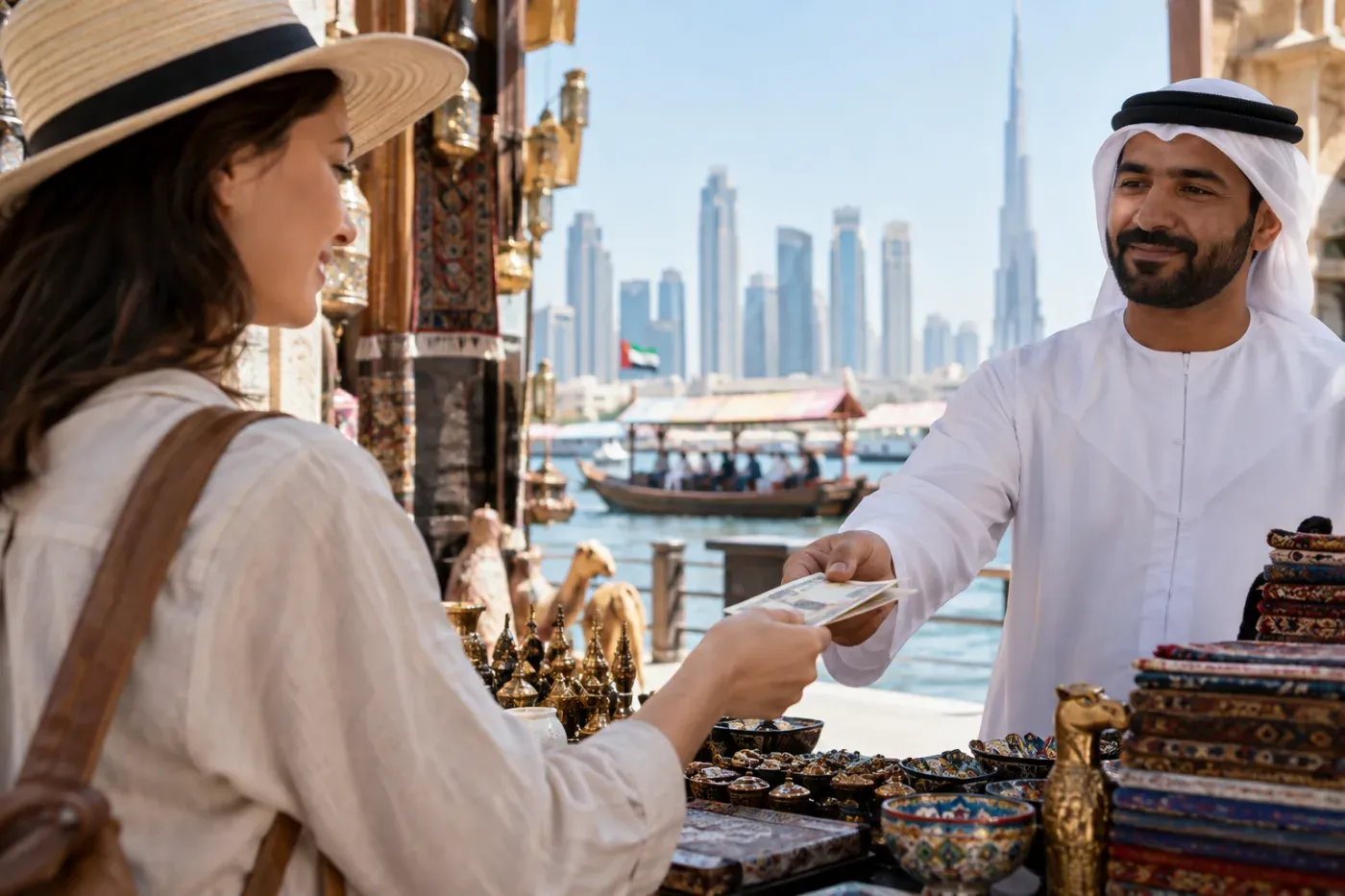
Currency Guide
AED (Dirham), pegged to USD at 3.67. Denominations and coins explained.
The dirham in sixty seconds
The UAE dirham (AED, often written Dhs or Dh) is pegged to the US dollar at 3.67, a rate that has not moved in decades — which means American visitors can do rough mental math by dividing by four, and everyone else gets welcome price stability. Notes run AED 5, 10, 20, 50, 100, 200, 500 and 1,000, with the newer polymer designs bright, plastic-feeling and hard to counterfeit. Coins (fils) come in 25 and 50 fils plus 1-dirham pieces, and you will accumulate them fast from abra rides, parking meters and cafeteria change.
Prices display with the total including 5% VAT, so the number on the tag is the number you pay — a small mercy frequent travellers notice immediately. ATMs dispense 100s and 50s by default; for small denominations, buy a metro ticket or a karak tea and break a large note early in the trip rather than arguing over change at a souk.
Coins, small notes and daily flow
Daily dirham life runs on small money: the AED 1 coin for abras, 5s and 10s for karak stalls and tips, 20s and 50s for cafeterias and taxis. Break large notes early — metro ticket machines, supermarket checkouts and mall food courts all give change willingly, while souk stalls and taxi drivers at midnight genuinely struggle with 500s. Keep a dedicated coin pocket or pouch; fils accumulate fast and exact change speeds every small transaction.
End-of-trip leftover strategy: spend coins and small notes first in the final 48 hours on souvenirs, snacks and tips, keep one 50 for the airport, and convert the rest at any exchange house or simply spend it airside at duty-free, which accepts dirhams at fair value.
Paying day to day
Cards rule the cities: Visa, Mastercard, Apple Pay, Samsung Pay and Google Pay work in malls, restaurants, taxis, metros and even most souk stalls these days. Cash still earns its pocket space for abra ferries (AED 1 coins), tipping, small cafeterias, parking meters, and the Gold Souk backstreets where cash sharpens bargaining. Carry AED 200–300 in mixed small notes and one coin handful, and you cover every cash-only corner of a normal itinerary.
Dynamic currency conversion is the tourist tax to refuse: when a terminal offers to charge you in your home currency instead of dirhams, always choose dirhams. The terminal rate hides a 3–7% markup over your own bank rate, and it applies to every hotel checkout and ATM withdrawal that asks. The correct answers are always pay in AED and withdraw in AED.
Money checklist
- Learn the peg: divide dirham prices by 3.67 (or roughly 4) for dollars.
- Always pay and withdraw in AED — decline conversion to your home currency.
- Carry AED 200–300 small notes plus coins for abras, tips and souks.
- Notify your bank of travel dates so the first Dubai transaction does not trigger a fraud block.
- Keep one backup card in the hotel safe, separate from your wallet.
❓ Common questions
Can I use US dollars or euros directly?
No — only dirhams are accepted, except a few airport duty-free counters. Exchange on arrival, not before departure where rates are worse.
Are ATMs easy to find?
Extremely: malls, metro stations, hotel lobbies and every high street. Use bank ATMs over standalone white-label machines for lower fees.
Is haggling in dirhams or my currency?
Dirhams, always. Converted prices round against you; negotiate in AED and pay in AED.
What is the smallest note I will actually use?
The AED 5 and 10 for abras, karak stalls and tips; 50s and 100s for restaurants and malls. The 500 and 1,000 notes belong in the safe.
Do prices include tax?
Yes — displayed prices include 5% VAT, so there are no register surprises. Tourists can reclaim VAT on larger purchases (see our Tax & Refund guide).
Still have questions about this?
Our Dubai-based team answers on WhatsApp in ~5 minutes, 24/7.