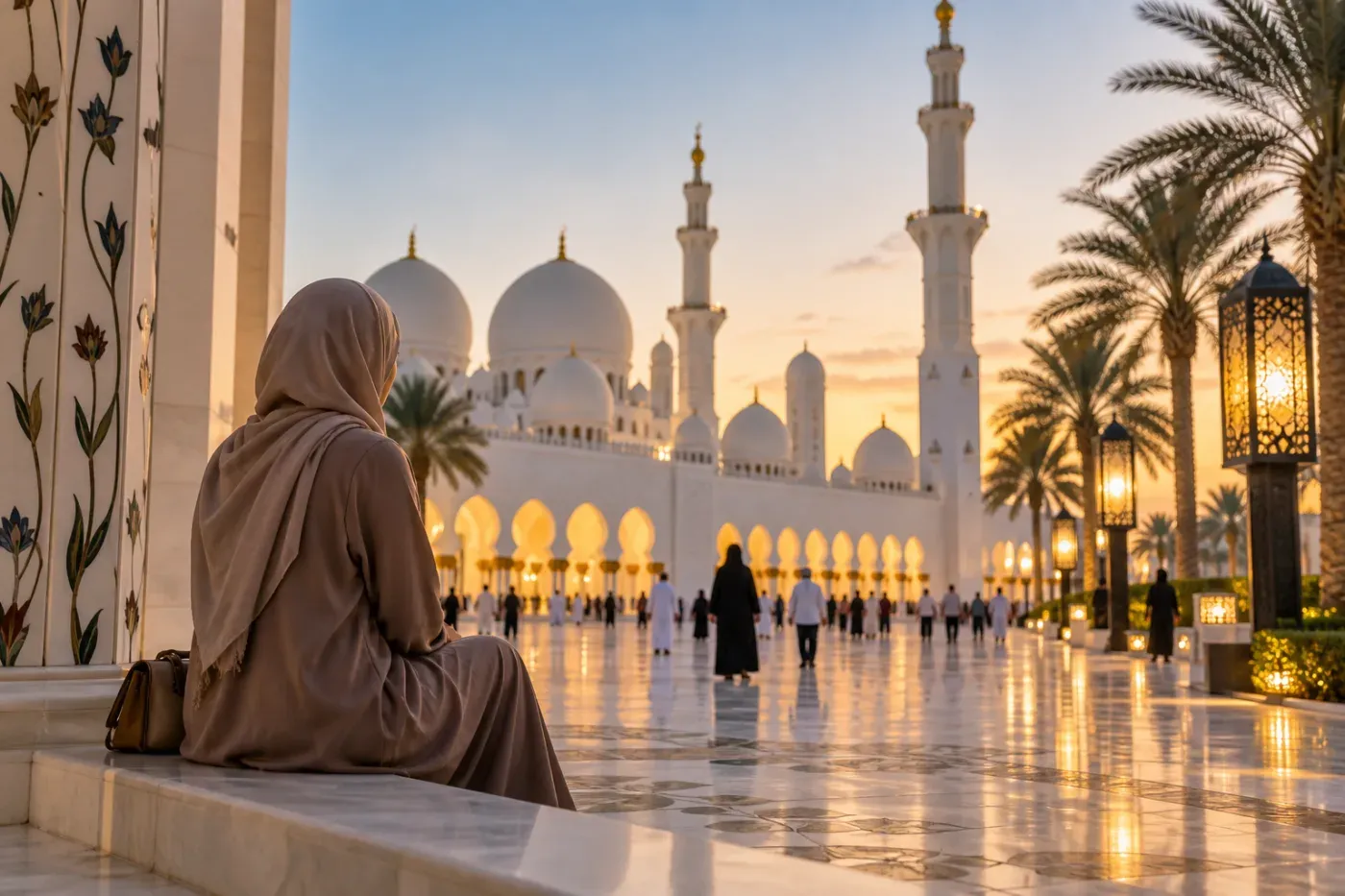
Ramadan Guide
No eating, drinking or smoking in public during daylight. Iftar experiences tourists can join — the best cultural experience of the year.
What changes for visitors
Ramadan shifts about eleven days earlier each year, and visiting during it is a feature, not a problem. Daylight hours bring the visible adjustments: no eating, drinking (including water) or smoking in public, shorter mall and attraction hours in places, and a quieter, slower daytime city. None of this applies inside hotels, in private, or in designated screened dining areas — and enforcement toward tourists is about discretion, not punishment.
What you gain outweighs the adjustments enormously. Iftar — the sunset fast-breaking meal — is the single best communal food experience in the country, with lavish hotel and mosque-adjacent tents welcoming non-Muslim guests. Nights come alive: streets, souks and malls stay open late, Ramadan markets appear, and the atmosphere of generosity is tangible. Many repeat visitors deliberately time trips for the last ten days.
How to behave well
The etiquette is simple consideration: do not eat, drink or smoke where fasting people can see you during daylight; keep music and beach exuberance muted; dress a notch more modestly than usual, especially in Sharjah and old districts. Restaurants mostly serve behind screens or curtains by day — eat inside without guilt, that is what the arrangements are for. Evening invitations to iftar (from guides, hosts, even new acquaintances) should be accepted whenever possible: arrive hungry, eat with the right hand when sharing, and compliment the food generously.
Business travellers note the compressed workday (shorter official hours) and slower response times — schedule critical meetings outside Ramadan when possible, or embrace the night-shift rhythm.
Suhoor, tents and late nights
Beyond iftar sits suhoor, the pre-dawn meal before fasting resumes — hotels and dedicated tents serve it as a serene late-night experience of quiet conversation and slow food, worth trying once for night owls. Ramadan tents themselves range from mall-adjacent commercial productions to mosque-community gatherings of genuine warmth; both welcome respectful tourists, and the community ones (often free or charity-priced) deliver the more memorable evening.
The month rewires city rhythm: malls and souks open late and stay open past midnight, traffic peaks shift to post-iftar hours, and the final ten nights carry special spiritual weight with extended prayers. Plan dinners after 8pm, sightseeing in calm mornings, and one unhurried night simply walking the lit-up old town.
Ramadan checklist
- No public eating, drinking or smoking in daylight — use screened venues.
- Book at least one iftar tent experience; hotel tents welcome tourists.
- Expect shorter attraction hours and slower daytime business responses.
- Dress slightly more modestly, especially in Sharjah and heritage areas.
- Nights run late — plan dinners after 8pm and souks after 9pm.
❓ Common questions
Can tourists eat during the day?
Yes, in hotels and screened restaurants. Just keep it out of public view during fasting hours.
Is alcohol available?
Licensed venues generally continue serving with adjusted discretion; daytime public drinking stays off-limits.
Are attractions open?
Mostly yes with shorter hours. Theme parks, malls and museums operate; check timings for specific sites.
Is Ramadan a good time to visit?
Wonderfully so for culture, food and prices — with the single caveat of daytime dining discretion. Many call it the best month.
What is suhoor?
The pre-dawn meal before fasting begins — some tents and hotels serve it as a late-night experience worth trying once.
Still have questions about this?
Our Dubai-based team answers on WhatsApp in ~5 minutes, 24/7.