Mosque Visit Guide
Which mosques welcome non-Muslims (Jumeirah Mosque, Sheikh Zayed Grand Mosque), dress code and what to expect.
The two essential visits
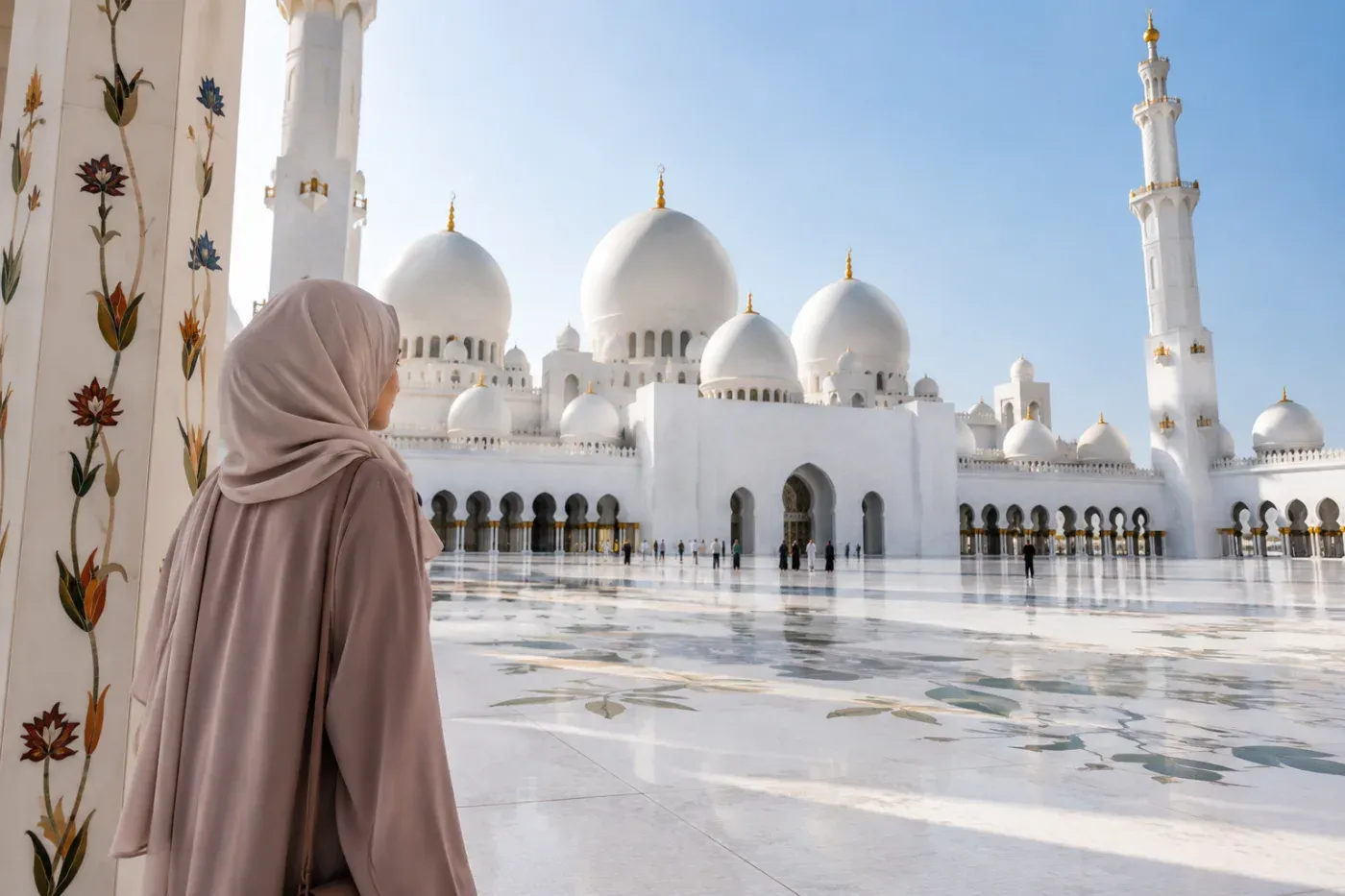
The Sheikh Zayed Grand Mosque in Abu Dhabi is among the largest mosques on earth and simply unmissable: 82 white domes, the world largest hand-knotted carpet, chandeliers the size of cars, and capacity for 50,000 worshippers. Free guided tours run throughout visiting hours (except Friday mornings), the visitor infrastructure is superb, and two to three hours vanish easily. Pair it with Qasr Al Watan across the city for the full Abu Dhabi culture day.
Dubai Jumeirah Mosque offers the intimate counterpart: a beautiful Fatimid-style landmark running the celebrated Open Doors, Open Minds programme — guided tours specifically built around visitor questions, ending with Arabic coffee, dates and pastries in the majlis. Smaller, warmer and more conversational than the Grand Mosque, it suits travellers who want dialogue over scale. Do both if schedules allow; they complement rather than repeat.
Dress, conduct and timing
Both mosques enforce dress codes with free loan garments: women cover hair, arms to wrists and legs to ankles (abayas and shaylas distributed at entrances); men wear long trousers and sleeved shirts, with wraps available. Swimwear, transparent fabrics and tight clothing are refused — arrive dressed right and skip the queue. Inside: silence phones, lower voices, never walk in front of worshippers praying, follow marked routes only, and pause photography during prayer times.
Friday midday is congregational prayer — visits pause and resume after, so plan Fridays for afternoons. Ramadan visits carry adjusted hours with special atmosphere. Sunset visits photograph magnificently as marble glows gold, while morning visits bring thinner crowds and softer heat.
What the tours teach
The guided commentary is the real exhibit: how the Grand Mosque carpet was hand-knotted by over a thousand artisans, why 82 domes proportion exactly so, how the lighting design shifts the marble through the day, and what worship rhythms structure Emirati life. Jumeirah programme leans conversational — guides invite the blunt questions (dress, prayer, fasting, gender roles) and answer with striking directness over coffee and dates.
Go beyond the two flagships if time allows: Al Farooq Mosque in Dubai (Andalusian-inspired, visitor-friendly), the Sharjah mosques exteriors at sunset, and Fujairah Al Bidya (the mud-brick Ottoman-era survivor, tiny and atmospheric). Each adds a century the big two skip.
Mosque-visit checklist
- Arrive modestly dressed; borrow free abayas/scarves at entrances.
- Join the free guided tour — the context transforms the architecture.
- Silence phones; never walk before praying worshippers.
- Avoid Friday midday; prefer mornings for crowds, sunset for photos.
- Photography in marked areas only; pause during prayers.
❓ Common questions
Can non-Muslims enter mosques?
The two above plus a handful of others welcome visitors with tours. Most neighbourhood mosques do not — respect the distinction.
Is there an entrance fee?
No — both major visitor mosques are free, tours included. Ignore anyone outside offering paid entry help.
How long should I allow?
Two to three hours for the Grand Mosque; 75–90 minutes for Jumeirah including the majlis refreshments.
Can I visit during Ramadan?
Yes with adjusted hours and a special atmosphere; guided tours continue around prayer times.
What about children?
Welcome, with the usual quiet-conduct expectations. The scale impresses kids enormously — bring them.
Still have questions about this?
Our Dubai-based team answers on WhatsApp in ~5 minutes, 24/7.