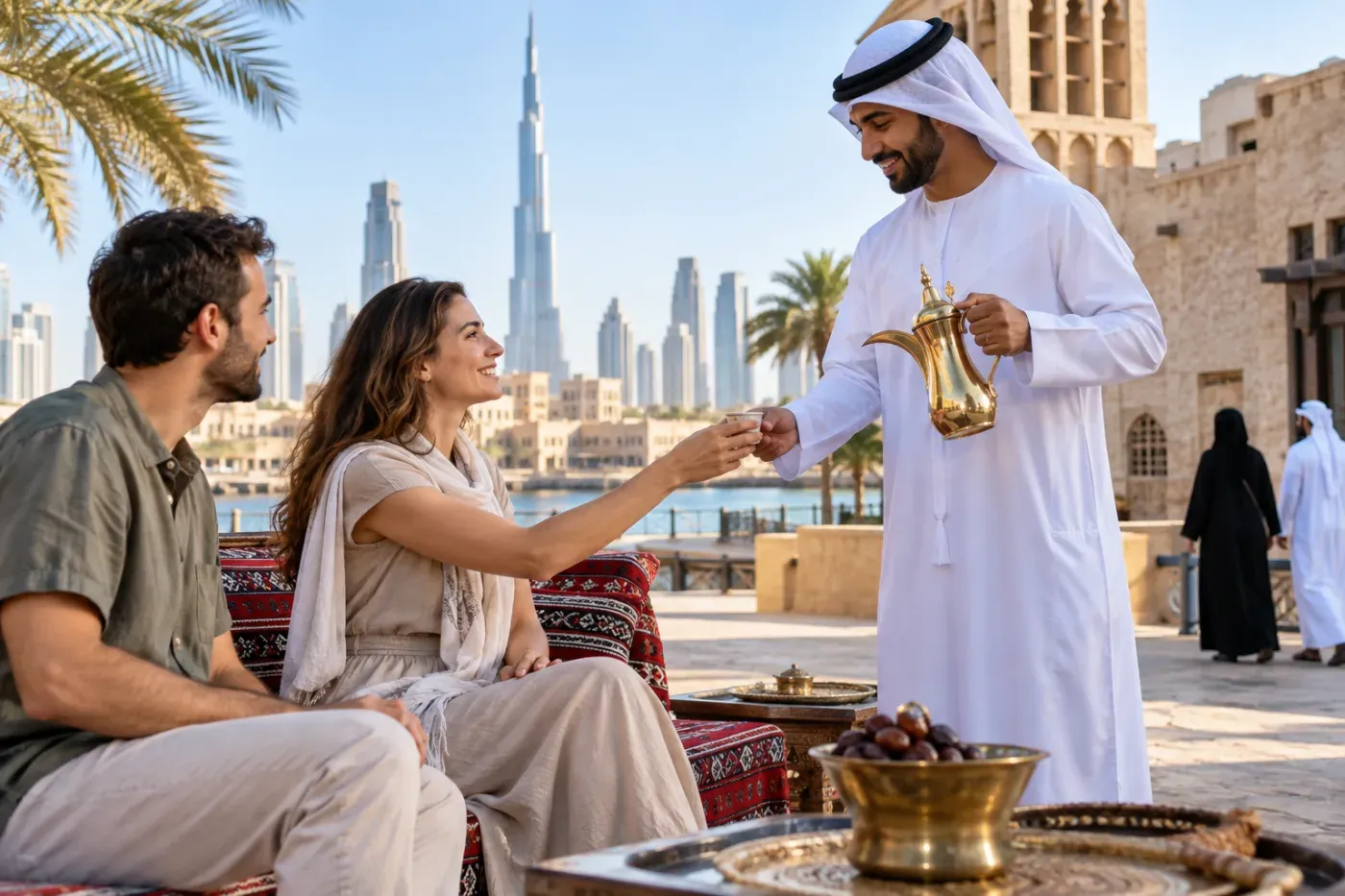
Understanding UAE Culture
Emiratis are only 10–15% of the population alongside 200+ nationalities. Tolerance and respect are core values. Arabic greetings and national dress explained.
A minority-majority country
The single most important fact about the UAE is demographic: Emiratis form roughly a tenth of residents, living alongside 200+ nationalities — Indians, Pakistanis, Filipinos, Egyptians, Britons and dozens more. The result feels less like one culture hosting guests and more like a global city running on mutual accommodation, with tolerance not as a slogan but as operating infrastructure. Respect flows in all directions here, and visitors who extend it receive it multiplied.
That diversity shapes daily etiquette: greetings matter enormously (a smile and As-salamu alaykum opens doors that English efficiency cannot), public conduct stays modest across communities, and religious observance — the call to prayer five times daily, Friday rhythms, Ramadan — structures public life even for non-observers. You do not need to participate; noticing and accommodating is the entire ask.
Dress, greetings and national symbols
Emirati national dress carries meaning worth reading: the white kandura (dishdasha) and ghutra headcloth for men, the black abaya and shayla for women — practical desert-origin garments elevated to formal wear, worn with evident pride. Tourists are not expected to adopt them (and rental-dress photo experiences divide opinion), but understanding them beats exoticising them: compliment craftsmanship, never treat wearers as photo props without consent.
Greetings run warm and unhurried: handshakes (wait for a woman to extend first), right-hand giving and receiving, and the nose-to-nose Emirati greeting between men you will witness but need not perform. Learn five phrases — salaam, shukran, inshallah, yalla, habibi — and doors, smiles and dinner invitations follow with suspicious ease.
Fridays, holidays and holy days
Friday carries the week spiritual weight: congregational midday prayers quiet the city briefly, malls open slightly later, and brunch culture takes over afternoons. Plan major mosque visits outside Friday midday, and treat the day unhurried rhythm as a feature — slow starts, long lunches, sunset Corniche walks. National Day (early December) and Eid holidays flip cities into festive mode with fireworks, sales and packed beaches; book accommodation early and join freely.
Mourning and solemn occasions occasionally adjust entertainment schedules nationally — bars may quiet, concerts postpone. Follow hotel guidance during such periods without complaint; respectful patience is noticed and remembered far longer than any itinerary disruption.
Cultural checklist
- Greet with As-salamu alaykum; wait for women to extend hands first.
- Give, receive and eat with the right hand.
- Dress modestly in traditional areas; ask before photographing people.
- Pause plans around prayer times near mosques without complaint.
- Accept coffee, dates and invitations — refusal needs genuine reason.
❓ Common questions
Can tourists visit mosques?
Two major ones welcome non-Muslims with tours (Jumeirah, Sheikh Zayed Grand) — see our Mosque Visit Guide.
Is it okay to ask about Emirati culture?
Warmly yes — guides, hosts and Emirati colleagues generally love explaining traditions to respectful visitors.
What is with the weekend days?
The working week runs Monday–Friday; Friday brunch culture and weekend crowds follow the Western calendar since 2022.
How do I address people?
First names with Mr/Ms in formal settings; first names directly in tourism contexts. Titles (Sheikh, Doctor) always honoured.
Is haggling part of culture?
At souks, yes — friendly bargaining is social ritual. In malls, no — fixed prices rule.
Still have questions about this?
Our Dubai-based team answers on WhatsApp in ~5 minutes, 24/7.